

10 Successful Strategies To Increase Attention Span In Preschoolers
Don’t we all wish our children could increase their attention span to keep themselves occupied when they’re younger?
Doesn’t it deplete so much of your energy having to partake in all the games and discussions and pretend-play when the kids are so very little?
I remember how I used to wish my 2 year old would just stay occupied on something by herself for more than 5 minutes without needing me.
At the same time, I didn’t want to rely purely on screen time because I knew how damaging screens are to the healthy brain development of young children, especially preschool age and younger.
After lots of scrolling, reading, and trial and error, I came to some important conclusions about attention span in preschoolers:
- young children certainly CAN play independently and stay focused without constant adult involvement;
- the adult must first lay the groundwork to establish good habits before expecting their child to magically focus;
- the length of time that a child is able to concentrate varies widely; and
- the adult must have reasonable expectations.

So what do I mean by attention span?
When I refer to attention span, I am talking about the ability to stick to a task or activities for a considerable length of time with limited adult involvement.
What other websites will tell you about attention span in babies, toddlers and preschoolers
All the advice out there suggests a good rule of thumb is that children can concentrate on a task for about 2 to 5 minutes per year of their age.
So that means, if you have a 1 year old, you can expect your child to focus for between 2 and 5 minutes.
If you have a 2 year old, you can expect your child to have an attention span of 4 to 10 minutes.
For a 3 year old, you can expect a bout of concentration for 6 to 15 minutes, and so on.
I’ve found this to be a useful measurement to set reasonable expectations for a parent to begin with. It would be madness to think a toddler can have an attention span of an hour, for example.
However, I can confidently say that both my children (2 and 5 at the moment) are more than capable of focusing on a task way beyond the highest estimate provided.
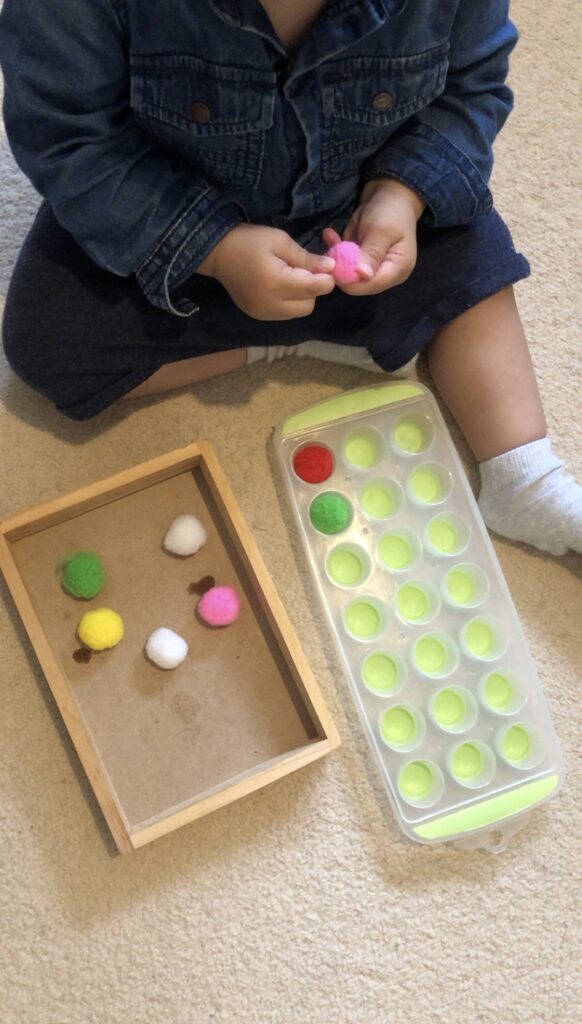
At 13 months, my son was engaged in a single task of putting pompoms into an ice cube tray for at least 15 minutes.
At 3 years old, my preschool daughter could be found playing with magnet tiles uninterrupted for at least 30-40 minutes.
These examples did not happen overnight, nor are they the norm for my children. It certainly does not happen every day. But crucially, this concentration does happen often.
What these examples show you is that lengthy attention span in young kids is definitely possible and they are more than capable.
But developing a child’s concentration has to happen on their terms – not yours.
What do I mean by this? Children are naturally curious beings and love to learn. But this doesn’t mean they want to learn what we want them to learn at the time we want them to learn it.
Children should be allowed to follow their own interests, which is led by an internal desire to fulfil a developmental need or skill.
They won’t be able to tell you this though, of course – you will have to work it out through observing your child!
It’s not an easy task. Observing our children with the intention to learn more about them requires slowing ourselves down and paying attention to what our children are doing, and therefore telling us.
These things are hidden and it’s kind of our job as parents to figure that out – but hey, we’ve been doing that since their newborn days right?
So let’s get to it.
What are the strategies and tips I’ve tried and tested to help my children increase their attention span?
We must start first with the prerequisites. I highly recommend establishing the following to help you and your child towards success.
FIRST: ensure your child is in the correct state of mind and emotion, i.e., fed, well-rested, and in a pleasant mood to achieve the prime state for play/learning. A child who is tired, hungry or dysregulated due to some form of stress won’t be able to focus.
SECOND: this is mainly for the very young, around 3 and under, though may apply to older children – ensure the child has had plenty of time for gross motor movement. Let them run around and burn off any extra energy. If they have a need to move, let them! It’s all great for healthy brain development too, which is priming the child for learning.
THIRD: Reduce or stop screen time in general if possible. Screens are known to have negative effects on the attention span for young children as it encourages the brain to become passive. For active learning and healthy brain development in young children, they need to be actively engaged in what they are doing, they need sensory input and hands-on, real-life experiences. Screens will limit these necessary experiences.
FOUR: Do not assume concentration looks like sitting still at a table working on one thing. It doesn’t look like this for very young children. For them, concentration may only happen outdoors or while moving a lot. As mentioned before, gross motor development is huge – and very necessary – in the early years.
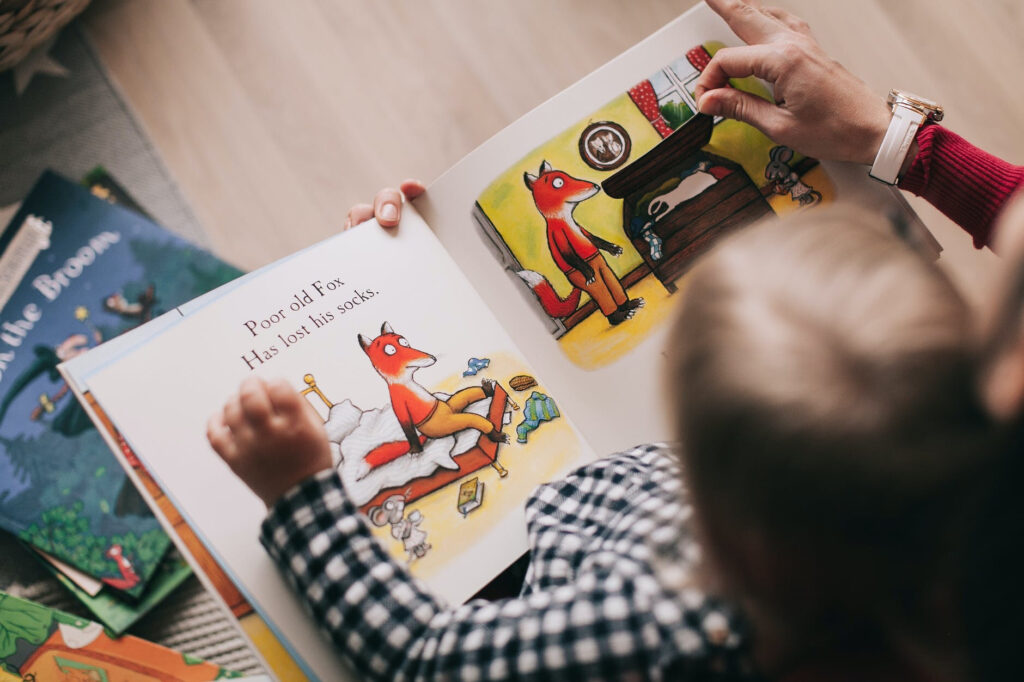
Now for my successful strategies and tips to help you increase your young child’s concentration:
1. Observation and response

It is an absolute must that you actually take the time to observe your child and try to understand what skills they are working on and what interests and motivates them. Once you have some ideas, you can try to choose activities and toys/materials to introduce to your child and see whether they are interested in them. You may not always get it right, but the more you observe, the more you will learn and the better your responses will be.
2. Offer hands-on, real life work


If you, like me, struggle with observing and knowing what kind of activity to offer your child because you are just unsure, offer opportunities to do real life work. In Montessori philosophy, this is called Practical Life. Up to age 6 or so, children love to be involved and help in real life activities and when given the chance, will gladly clean, dust, pour, spray, help to cook, and so on.
3. Nature is the best environment to focus in

All kids love nature if given the chance to explore it. Nature provides so much sensorial stimulation that it is an easy environment in which your child can start to build their stamina for concentration. Offer options to your child like pulling apart leaves, picking blades of grass, listening out for specific sounds, examining close details in flowers, or identifying different colours and rock types. This is all building up their focusing capabilities that they can later transfer to a different context.
4. Offer limited choices
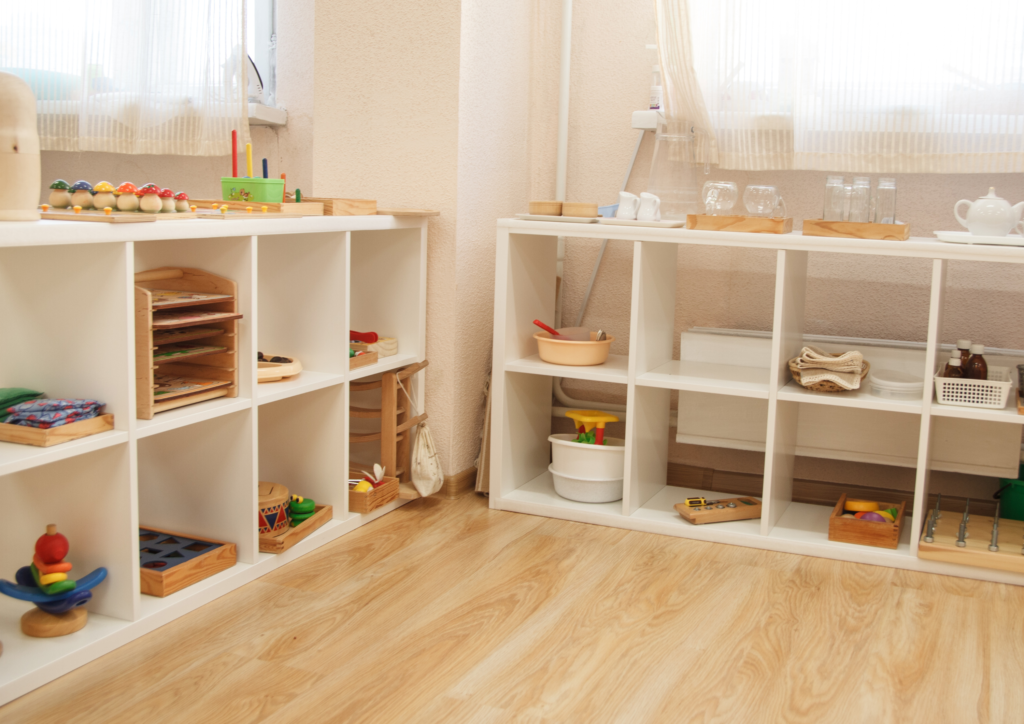
Offer options and observe what your children gravitate towards BUT limit their choices to reduce overwhelm and encourage them to hone their focus. Children can concentrate best when they have limited information to have to digest at once. If given too many options at once, this becomes overwhelming and the child may give up engaging with any of the items in front of them. It also helps to present the limited options, their toys for example, in a simple, organised way, such as on open shelving. This increases the likelihood of the child engaging and therefore, more opportunity to build their attention span.
5. Do not interrupt when your child is concentrating
Once they are working on something, do NOT interrupt your child. This is a sure-fire way to break their focus and therefore break their stamina for concentrating. That means you shouldn’t label what they are doing (‘yes, that’s the yellow car’), don’t quiz them (‘how many do you have there, is it 3 or 4?’), don’t praise them (‘well done, you stacked the blocks!’), and don’t offer suggestions when they haven’t asked for help (‘try placing it the other way round’). Any kind of interjection, even with the best of intentions, just breaks your child’s concentration and when that happens too often, subconsciously their attention span will shorten in anticipation of being interrupted. So don’t do it! You’d just be working against your goal!
6. Do not correct your child when they make mistakes
We want our children to do well and part of that is helping them to fix a mistake when they’ve made one. The problem with this approach is that by correcting a mistake in the moment, we remove our child’s agency and the opportunity for them to independently problem solve. Mistake-making is an extremely important learning process and crucial for building attention span, as the brain begins building neural connections as it pieces together the answer. Plus, trying to correct our young child’s mistake is a type of interruption and we already know why interrupting is to be avoided. Instead, where possible, try to ensure you provide an activity that is self-correcting/has a control of error (see image below) so the child is encouraged to continue problem solving independently.
7. Have all the necessary elements for the activity available

Where possible, ensure your child has all the items and materials they need for the activity they are working on to minimise the need for you to step in and cause an unintended disruption and break the focus. For e.g., if you are providing a wet pouring activity, allow just enough water to fill up the containers you have given them and provide a cloth for spills. This way, they shouldn’t need to come to you asking for help.
8. Offer opportunities to repeat the same skill
Concentration grows when children have the chance to repeat what they are doing so they can master whatever skill(s) they are working on, so where possible, provide activities and opportunities where the child is able to repeat if they want to.
9. Stay close but provide distance
Little children yearn for the safety of their loved adult, so they will want you to be close by, sometimes watching them, when they are working or playing. However, as mentioned, children also need space to allow them to focus uninterrupted. So, remain nearby and make your presence felt for comfort but leave your child to what they are doing. You could even do your own activity at the same time to model concentration yourself.
10. Give it time, be consistent and persevere
Building concentration does not happen overnight – it takes time and persistence. So, do not be discouraged if you don’t see results straight away. However, be consistent with this approach and the more you follow my tips above, the more success you will see.
Finally, crucially, ensure YOU have the right mindset throughout. Ensure your expectations are reasonable and don’t pressure your child. Allow them the freedom they need to build their aptitude for concentration and slowly but surely, the focus will increase.
If you enjoyed this post, you may also like:
Salaam x


