Demystifying the Montessori Sensitive Periods: A Full Breakdown
Are you intrigued by the Montessori sensitive periods? When I first heard this term, I thought it was about times in a child’s life when they were more likely to be highly emotional!
Hint: I was wrong.
What are Montessori’s ‘sensitive periods’?
The Montessori sensitive periods are times of intense interest in children towards something that will help their psychological or physical development. These urges are biologically built into them and children are not conscious of them at all.
Some call the sensitive periods ‘windows of opportunity’. In that time, the child is internally motivated and intensely focused on learning something. That learning comes very easily to them, taking very little effort on their part.
As a parent, you may have noticed how sponge-like your child’s mind is. Young children seem to just pick everything up with ease. Montessori refers to this as ‘the absorbent mind’ and the sensitive periods help us to understand how this absorbency works.
I’ll go into more detail below on the different sensitive periods, but to give a brief example, language learning is easiest in children between ages 0-6 years old. After this time span, it is still possible to learn another language but it takes more conscious effort and motivation.
Each sensitive period lasts years, may evolve in nature and will likely overlap with other sensitive periods. Each individual child will experience their own sensitive periods differently to another child, but there will definitely be some similarities that you will be able to recognise in every child.
If you want to understand the broader Montessori philosophy, particularly as a Muslim, see my post: Muslim and Montessori: Can you be both?
How did Maria Montessori discover the sensitive periods in children?

It all started with a butterfly.
Maria Montessori first coined the phrase ‘sensitive periods’ after she learned about the research of a fellow scientist of her time into the sensitivities of insects through the study of the Porthesia butterfly.
(Fun side fact: Montessori thought it was Dutch botanist, Hugo de Vries, who made this discovery about the behaviour of butterflies but it was actually Jacques Loeb!)
The professor found that baby caterpillars are particularly sensitive to light. After it hatches, the baby caterpillar has a strong biological drive towards light. This intense interest guides the baby caterpillar up towards the top of the tree branch, away from where it hatched, towards the softest leaves which are suitable for it to eat.
This urge towards the light is developmentally crucial because without it, the baby caterpillar would die! It is unable to eat the coarser, tougher leaves near the trunk of the tree where it hatched, and so this intense interest in light is an evolutionary need to support its physical development.
Importantly though, once the caterpillar has grown up and can start eating the larger, tougher leaves, the sensitivity to light disappears. Light is no longer interesting to the caterpillar and that original intense urge towards light will never return.
What does this have to do with children, I hear you ask?
Montessori’s research into childhood development was based on years of her own scientific observation into children. She discovered that children also have these ‘sensitive periods’ similar to an insect’s drive towards light.
In her book, The Secret of Childhood, Maria Montessori explains:
“A sensitive period refers to a special sensibility, which a creature acquires in its infantile state, while it is still in a process of evolution. It is a transient disposition, and it is limited to the acquisition of a particular trait. Once this trait or characteristic has been acquired, the special sensibility disappears.”
In other words, humans have these special periods of time, only in their childhood, where they are unknowingly driven towards an interest or in achieving a particular developmental milestone. During this time, the child is most easily able to achieve that skill or trait. Once the time has passed, however, the drive disappears and will never return and that specific learning becomes more difficult.
What are the six sensitive periods that Montessori discovered?
Montessori sensitive period for order
When it occurs: from 6 months to 5 years old (tends to peak around 18 to 24 months)


I know most parents call BS on this one when they first learn that kids have a sensitive period for order, especially the part about it being the most intense in toddlerhood. Toddlers are untidy, clumsy, and actively enjoy making a space messy, right?
Sure – this is true. My 2 year old son seems to have a particular fondness for emptying a basket of blocks all over the floor the very moment I’ve just tidied them up!
But the sensitive period for order is less about mess and more about systems. A child’s need for order is about predictability and consistency, which babies, toddlers and young children need to thrive. I’m talking about routines, habits and the comfort of knowing where things go.
Clues your child might be in the sensitive period for order
Have you noticed your toddler have a meltdown or tantrum if you suddenly change plans without warning?
Does your child make a big deal if you try to move something from its usual place?
Does your child like to start their day in the exact same way every morning?
All of these are clues that your child is in a sensitive period for order.
My 2 year old son is currently in the thick of his sensitive period for order and here are some clues that tell me this:
- He has started to play by lining up his blocks in order and will do this intensely for a long time
- He loves to tell me which things belong to which person in the family (“this my one, this your one, this abba’s one”)
- He has a very predictable bedtime routine and knows what will happen at each stage; if I differ from it, he will remind me (“book time, mummy”)
- He has started to show some interest in counting (but more on the sensitive period for maths later!)
A lesser known benefit of the sensitive period for order is its importance in developing confidence and resilience in children. In Montessori: The Science behind the Genius, Lillard Angeline Stoll talks about children having a ‘can do’ attitude as a result of finding comfort in familiarity: ‘Regularity and predictability in one’s daily schedule might promote such a sense’. However, ‘habitual uncertainty about what will happen next would lead to having a diminished sense of control’.
In terms of the mess-making, keep in mind that toddlers like orderly and organised spaces, but they don’t necessarily have the skills to keep things tidy themselves yet.
For example, you may notice they are more likely to play in a tidy, orderly space instead of a very cluttered, disorganised environment which is likely to overwhelm them. But that doesn’t mean they will keep the space as tidy as they found it! And once it’s suitably messed up (often by their own hands!) they will move on to something else. A bit of a catch-22, but that’s toddlers for you!
After age 5, this sensitive period starts to dwindle and is usually gone by around 6 years old. At this point, children care less about order and things being in their place, and move onto other interests.
Montessori sensitive period for language
When it occurs: from 0-7 years old (tends to peak around 2 years old, but can vary a lot)

Babies start listening and receiving language from the moment they are born as they effortlessly soak up the information around them (with that absorbent mind I mentioned earlier!)
We cannot tell what is happening inside their cute little brains, but we know this is prime time for kids to pick up rich vocabulary and the natural rhythms, patterns and grammatical structures of language.
Montessori found that when adults spoke to babies, their eyes were often directed at the mouth region, which arguably is to help the babies see how to produce the words they are hearing when they eventually reach the stage of beginning to babble and talk.
You may also notice that it is in this stage of childhood that children are most intensely interested in books and stories – a wonderful way to acquire new language.
This is why it’s really important for babies to have adult interaction, so they can see the mouth movements and connect them with the words they are hearing. This type of interaction cannot be replaced by screens, especially cartoons, where children won’t be able to make those natural connections as easily.
When children actually begin to talk, you may notice a steady increase in words over time or it may be a sudden explosion of language out of nowhere.
With my eldest, who is now 5, she was speaking in short sentences by 18 months old and we can’t ever really remember when she wasn’t talking – it all just happened very steadily.
With my youngest, who is now 28 months, we noticed a sudden explosion just before he turned 2 years old. Prior to that, he was saying a few words at a time and wasn’t that interested in trying to have conversations. Out of nowhere, seemingly overnight, he was saying brand new sentences and was keen to have back and forths with us as if he was mimicking being an adult!
These examples show how differently a child can experience and manifest their sensitive periods, but it is very reliably within the broad timeframe that Montessori outlined.
The sensitive period for language also includes a sudden interest in reading and writing which tends to begin around age 3.
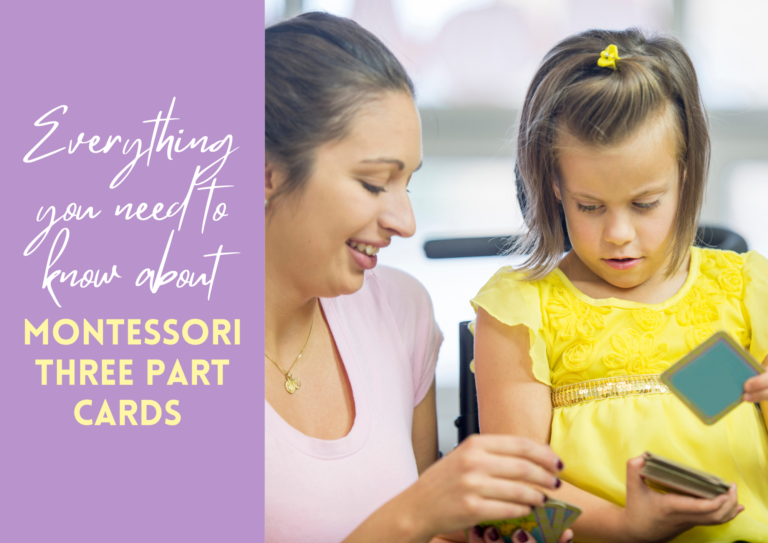
See my post on Montessori 3 part cards here, an essential Montessori tool to teach new language to children.
Montessori sensitive period for movement
When it occurs: from 0-3 years old and then refinement of movement from 3.5-5 years old

Do you ever look at your child who’s been spinning and jumping and running around in the playground for an hour already, and wonder where they get their energy?
Or watch them when they’re on the floor playing with their blocks but they keep squirming and moving from one side to another, and just can’t sit still in one place?
Yep – it’s a Montessori sensitive period.
From the moment babies are born, they are keen to move and in the space of under a year for some children, babies go from being helpless, floppy little things to wibbly-wobbly walkers on two legs.
In no other period of your life will you make such huge developments physically at such a fast pace. Babies really are magnificent, when you think about it.
From birth to around age 3, children are most engrossed in developing their gross motor skills or large body movements. This includes learning to sit, crawl, pull up, stand, walk and run.
Some people even suggest there is a special sensitive period just for walking, which is a huge driver for babies. You may even notice toddlers who have started to walk independently with fewer wobbles often refusing to hold hands as they walk – it’s like a badge of honour for them!
After around age 3, you will see young children start to show more interest in precision activities. This includes focusing on practising fine motor skills such as pinching, tweezing and holding pencils. (Do you notice how this coincides with the sensitive period for writing I mentioned earlier?)
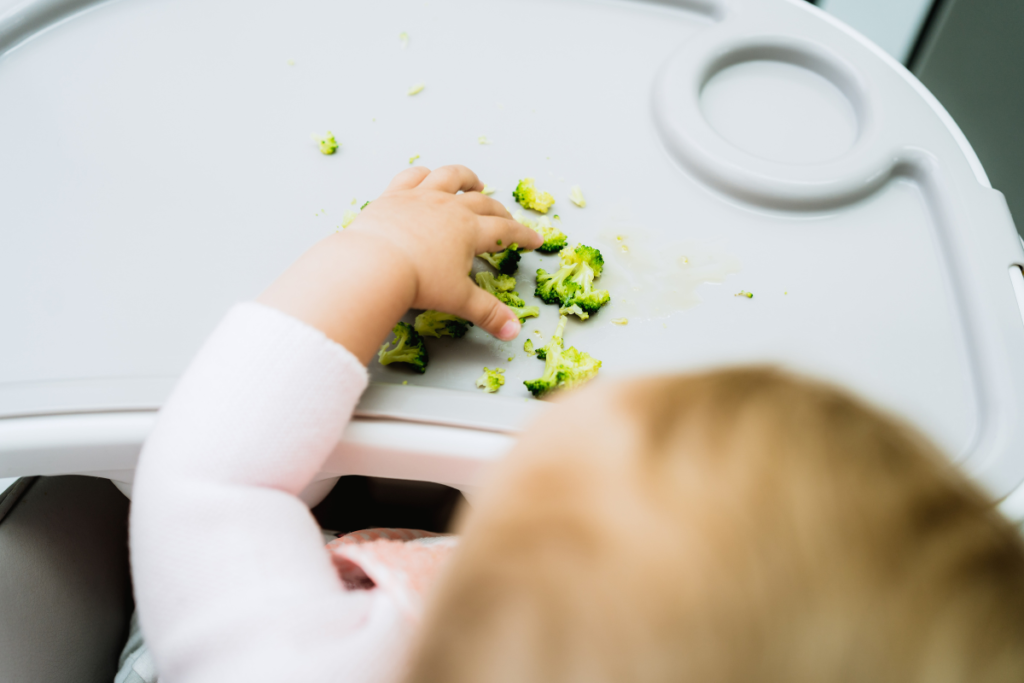
While babies do work on fine motor skills before age 3 (such as picking up bits of food from their plates), it is after age 3 that this type of precise work becomes most interesting for them.
After around 5 years old, the intense need to move starts to dwindle away and you will find your child able to sit for longer periods of time and this will continue to increase as they grow older.
Montessori sensitive period for sensations
When it occurs: from 2.5-6.5 years old
Montessori called this sensitive period the ‘special epoch for sensation’ which is pretty sensational in itself, to be honest.
This sensitive period simply means that young children are most open to learning through the tactile sense or through touch.
While Montessori suggested this sensitivity begins around 2.5 years old, you may notice this earlier in your baby who touches and mouths almost everything as a way of learning about the world.
As your child grows, they are likely to show intense interest in playing with things like play dough, slime, sand, and other engaging sensory materials.
Young children will also learn advanced concepts about the world best through hands-on activities, rather than something like a workbook or worksheets. For example, learning about number quantity by touching and counting out physical items is the best foundation to learn mathematical ideas, rather than just learning on a page or through memorisation.
Click here to read my 7 easy tricks to make worksheets fun for kids!
Montessori sensitive period for small objects
When it occurs: from 1-3.5 years old

Have you ever had your child suddenly run across the room to find and pick up a tiny little crumb on the floor, take it close to their eyes, stare at it, admire it, and if you’re unlucky like me, eat it too?
That’s not just your child being kinda gross.
Author, Lillard Angeline Stoll, discusses this in her book: “Dr. Montessori saw children as being in a sensitive period for the perception of tiny objects beginning in the second year of life. One-year-olds become captivated by very little things, stopping for example to watch ants on a sidewalk or to gather little pebbles.”
In Montessori’s own words: “Children are no longer drawn… to showy objects or bright colours, but rather to tiny things that we should not notice. It is as though what now interests them is the invisible, or that which lies on the edge of consciousness.”
This quote from Montessori really resonated with me as it triggered a surreal memory.
My toddler once got my attention that there was a mosquito in his room. He tracked the movement of this minute insect around his room without losing sight of it once. I, on the other hand, kept losing it and could not for the life of me focus my eyes enough to stay on the mosquito. I had to keep asking my toddler where it was, and each time, he showed me with ease.
Long story short, I failed to swat the bloody mosquito. But I couldn’t believe how incredibly focused my son was on that tiny little insect. I was in awe!
You’ll know if your child is in the sensitive period for tiny objects if they are attracted to very small items like beads or grains of rice, and like to pinch them in their fingers or play with each one individually.
This may coincide with the sensitive period for the senses because it is definitely a fascination which is rooted in the sense of touch.
Montessori sensitive period for social awareness
When it occurs: from 2.5-6.5 years old


In the very early years, children are not that bothered about friendships and what their peers think. They are very content to satisfy their own needs and urges, and not that keen about sharing or taking turns. This might look like children playing side by side in the same area rather than actively playing with each other.
Eventually, as the child grows older, starting around 2.5 years old, you may notice they are more likely to talk about their friends and are keen to be more social. They are entering the sensitive period for social awareness.
This means the child is interested in learning about the customs of society, wanting to imitate the social actions of people around them. This may involve learning how to take turns and collaborate, beginning to understand compromise and waiting, rather than having their urges fulfilled immediately, and manners.
This stage lasts many years as it involves so many aspects of a child’s development.
More sensitive periods others have noted:
Mathematics
When it occurs: from birth to 7 years old


Montessori believed babies were born with mathematical minds, and this is likely to be an off-shoot of the sensitivity to order. Children thrive from precision and patterns, like the predictability of routines I mentioned earlier.
Up to around 4.5 years old, you will find young children interested in foundation maths concepts such as pattern-making, colour sorting, grading by size, and verbal counting (just with words).
From around 4.5 years old though, children become very interested in more academic maths concepts like number quantity and basic maths operations, like addition and subtraction.
Toilet learning
When it occurs: from 18 months to 2 years old

This is a short window when children are interested in learning how to go to the toilet independently. They may show signs that they are aware of being wet or dirty in their nappy, or in the case of my son, hiding in the corner to do a poop.
There are many other signs of toilet readiness that will help you figure out if your child is in the sensitive period for toilet learning.
Music
When it occurs: from 3.5 to 7 years old
Arguable, this sensitive period starts much earlier, as we know babies love lullabies and toddlers and preschoolers are always game for a nursery rhyme.
Young children often respond really positively to melodies and songs, and they can be a powerful tool to help with emotional regulation. Hands up who sings a song to help their child brush their teeth? Yep, me too.
However, from around 3.5 years old, children are particularly sensitive to music and may be able to learn the use of an instrument easily in this time. After around 7 years old, this aptitude begins to fade away and learning an instrument may take more effort.
Why should you as a parent care about your child’s sensitive periods?
There are many reasons why having a basic awareness of the Montessori sensitive periods may help you as a parent:
- You will understand your child better which may strengthen your connection with each other.
- It will help you to have realistic expectations about your child. For example, not expecting your 18 month old to share willingly because they are not developmentally capable yet.
- It will give you an understanding of why your child may be behaving in a certain way or why they may be obsessed with doing one thing in particular again and again.
- It may explain certain developmental changes/explosions that you might not have noticed otherwise.
- Once you understand what sensitive period your child is in, you can provide rich experiences to help your child more readily meet their developmental drives.
- It is an interesting insight into child development! This information is certainly not ‘need to know’ information – but it is definitely interesting! Especially when you see the development happening in your own children.
If you want to know more about Montessori from a parenting perspective, see my post here: Is Montessori Parenting Real? Everything You Need to Know
How do you know when your child is in a sensitive period?
You will never know for absolute certainty if your child is in a sensitive period and which one it is.
However, thanks to Maria Montessori’s close observations, we have a general timeline for these sensitive periods, which is a good indication to help keep you alert to what is happening as well as paying attention to the specific behaviours of your child.
Final takeaways on Montessori’s sensitive periods
As you may have noticed already, many of these periods of your child’s development will overlap. They do not happen neatly, one after the other, and evidence in your child’s behaviour for one sensitive period may also be evidence of another sensitive period too.
Montessori believed that it is the responsibility of educators to make the most of a child’s sensitive periods by watching them closely, noticing what excites and draws their attention, and then providing lots of high-interest input for the child to help their development.
But as parents, it’s much more simple.
We don’t need to know everything about each sensitive period in detail as parents. The main thing is to try to be attuned to your child and, if necessary, reframe your thinking about their behaviour.
When your child is obsessing over something you might think uninteresting or unimportant, could that be a sign of a sensitive period? Can you find ways to support your child in healthy ways instead of trying to stifle the behaviour?
Be curious and inquisitive, see if you can spot any interesting signs, and use that as an opportunity to build the connection between you both.
Many researchers have discovered more sensitive periods in children beyond those that Montessori originally found, and there may well be many more that future research uncovers.
So trust your child, have an open mind, and enjoy those important early years.
May God bless your efforts and strengthen your connection with your children. Ameen.
Salaam x